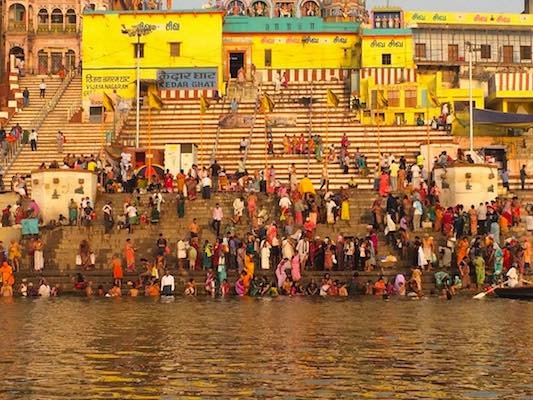
"Older than history, older than tradition, older even than legend." This is how the celebrated author Mark Twain famously described Varanasi after his visit in the late 19th century. Also known as Kashi or Banaras, this sacred city on the western banks of the holy River Ganges in Uttar Pradesh is one of the oldest continuously inhabited cities in the world. A trip to Varanasi is not a typical vacation; it is an intense, chaotic, beautiful, and profoundly transformative spiritual journey.
The Spiritual Heartbeat of the Ghats
Varanasi is believed to be the cosmic center of the universe and the earthly abode of Lord Shiva. Thousands of devotees flock here daily, believing that a dip in the Ganges absolves them of their sins, and that being cremated on its banks guarantees Moksha -- liberation from the endless cycle of rebirth.
The true essence of Varanasi lies in its Ghats -- the long stretch of stone steps leading down to the river. There are about 88 ghats in the city, each with its own myth and history.
- Dashashwamedh Ghat: The most famous and vibrant ghat. Every evening, this ghat hosts the spectacular Ganga Aarti -- an incredibly moving fire ritual featuring brass lamps, chanting priests, incense, and thousands of devotees.
- Manikarnika Ghat: The primary cremation ghat. It is a sobering, powerful place where funeral pyres burn 24 hours a day, offering a stark reminder of life's impermanence.
- Assi Ghat: Located at the southern end, popular with long-term travelers, researchers, and students. A peaceful spot to start a morning boat ride and witness the sunrise over the Ganges.
Watching the sun rise over the Ganges, painting the ghats and temples in hues of gold and pink while the city wakes up to prayer, is an experience you will never forget.
Beyond the River: Temples and Narrow Alleys
Varanasi is a city to get lost in. Step away from the river into the galis (narrow, labyrinthine alleys) of the old city. You will share these ancient walkways with wandering cows, sadhus (holy men), silk weavers, and pilgrims.
- Kashi Vishwanath Temple: One of the most important Shiva temples in India. Its soaring spires are plated with 800 kilograms of pure gold.
- Sarnath: Just 10 kilometers away lies Sarnath -- the tranquil deer park where Lord Buddha gave his first sermon after attaining enlightenment. A peaceful contrast to the sensory overload of Varanasi.
Best Time to Visit Varanasi
- Winter (October to March): The most ideal time. Cool and breezy weather makes the endless walking through alleys and sitting by the river highly comfortable. Major festivals like Diwali and Dev Deepawali (when the ghats are lit with a million earthen lamps) occur during these months.
- Summer (April to June): Brutally hot, with temperatures exceeding 45°C. The hot, dry winds make daytime exploration very difficult.
- Monsoon (July to September): The Ganges swells massively, often flooding the ghats. Humidity is very high.
Practical Travel Tips
How to Reach: Lal Bahadur Shastri International Airport in Varanasi connects to major cities. Varanasi Junction is a major railway hub with excellent connectivity across India.
The Morning Boat Ride: If you only do one thing in Varanasi, hire a rowboat at dawn. It is an experience you will never forget.
Local Cuisine: Banaras is famous for its street food. Don't miss Kachori Sabzi, sweet Malaiyyo (available only in winter), and the legendary Banarasi Paan.
Comments
Be the first to share your thoughts!