The Deepest Linguistic Roots
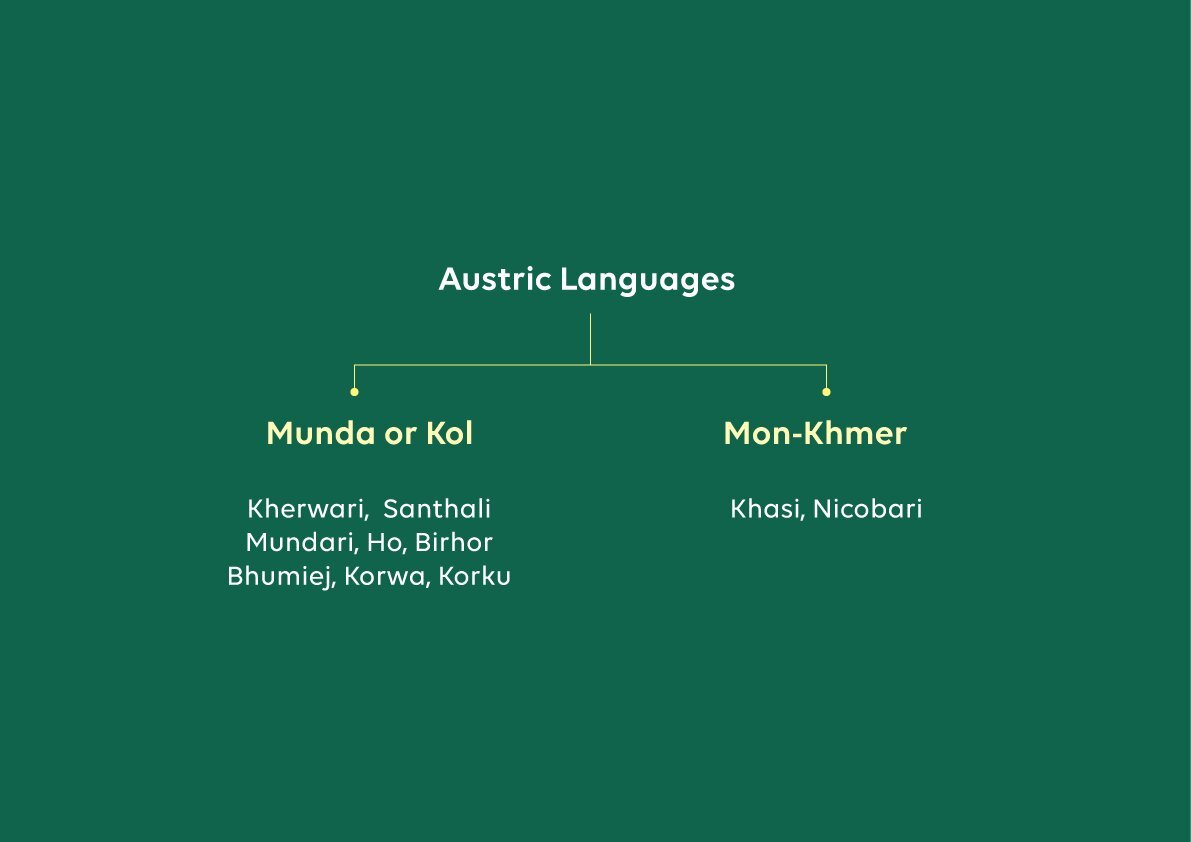
While Indo-Aryan and Dravidian languages dominate the headlines, the Austro-Asiatic (Austric) languages represent some of the oldest indigenous voices of the Indian subcontinent. In India, we primarily hear the Austroasiatic branch -- specifically the Munda and Mon-Khmer sub-groups.
The Munda and Mon-Khmer Speakers
The Munda languages are spoken predominantly in the eastern and central hills of India. The most prominent is Santali, which has its own script (Ol Chiki, invented by Pandit Raghunath Murmu) and holds the prestigious status of an 8th Schedule language. Other vital Munda languages include Mundari, Ho, Korku, and Savara.
Meanwhile, the Mon-Khmer branch is famously represented by Khasi, widely spoken in the northeastern state of Meghalaya -- the very same land of misty waterfalls and living root bridges described in our monsoon travel guide.
[pullquote]Preserving Austric languages is vital -- their vocabulary and syntax hold the key to understanding India's ancient demographic past, long before recorded history.Historical Shifts and AryanizationAnthropological evidence shows that some heavily "Aryanized" tribes in northern India originally belonged to the Munda linguistic stock. These communities were once widespread across the plains before being displaced to hilly and forested terrains by later migrations. Their languages are windows into a pre-historic India that most written records never captured.

Comments
Be the first to share your thoughts!