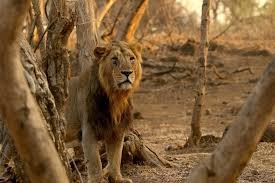
When one thinks of lions in the wild, the savannas of Africa usually come to mind. But deep in the dry, scrubby jungles of Gujarat lies a hidden gem of Indian wildlife conservation: Gir National Park. This forested, hilly sanctuary, spreading across 1,412 square kilometers, is the only place on Earth where you can see the majestic Asiatic lion (Panthera leo persica) roaming free in the wild.
The Conservation Success Story
The story of the Asiatic lion is one of spectacular revival. By the late 19th century, rampant hunting had decimated the lion population, leaving fewer than 20 individuals clinging to survival in the Gir forest. Recognizing the impending tragedy, the Nawab of Junagadh stepped in and banned hunting. The sanctuary was officially established in 1965. Thanks to decades of rigorous conservation efforts, the lion population has rebounded phenomenally -- according to the 2020 census, the population has grown to a healthy 674 lions.
From fewer than 20 individuals to 674 lions -- the Asiatic lion's revival is one of the most inspiring conservation success stories in the world.
What to Expect on a Gir Safari
The landscape is a mix of dry deciduous forest, acacia scrub, and rocky hills cut by seasonal rivers.
- The Asiatic Lion: Slightly smaller than their African cousins, Asiatic lions are distinguished by a longitudinal fold of skin running along their belly.
- Other Wildlife: Indian leopards, striped hyenas, golden jackals, chital (spotted deer), sambar, nilgai, and the rare four-horned antelope (chousingha).
- The Devalia Safari Park: Also known as the Gir Interpretation Zone, this 4.12-sq-km fenced compound houses lions and leopards. The 45-minute bus tours here virtually guarantee sightings if you're short on time.
Best Time to Visit Gir National Park
- Winter (December to March): The best time. Cool and dry weather with temperatures ranging from 10°C to 25°C. Comfortable jeep safaris with active wildlife.
- Summer (April to June): Extreme heat (up to 42°C), but the dry season thins out the vegetation and forces lions to gather around the few remaining water sources -- best for wildlife photographers.
- Monsoon (July to October): Park is closed to tourists every year to protect the animals during breeding season.
Practical Travel Tips
How to Reach: Nearest airports: Rajkot (about 160 km) or Diu (about 110 km). Closest railway station: Junagadh, 65 km away.
Permits: Safari permits are strictly limited. Book online through the official Gujarat Tourism wildlife portal well in advance.
Cultural Experience: Visit the settlements of the Maldharis -- a local pastoral community that has coexisted harmoniously with the lions in the Gir forest for centuries.
Comments
Be the first to share your thoughts!